

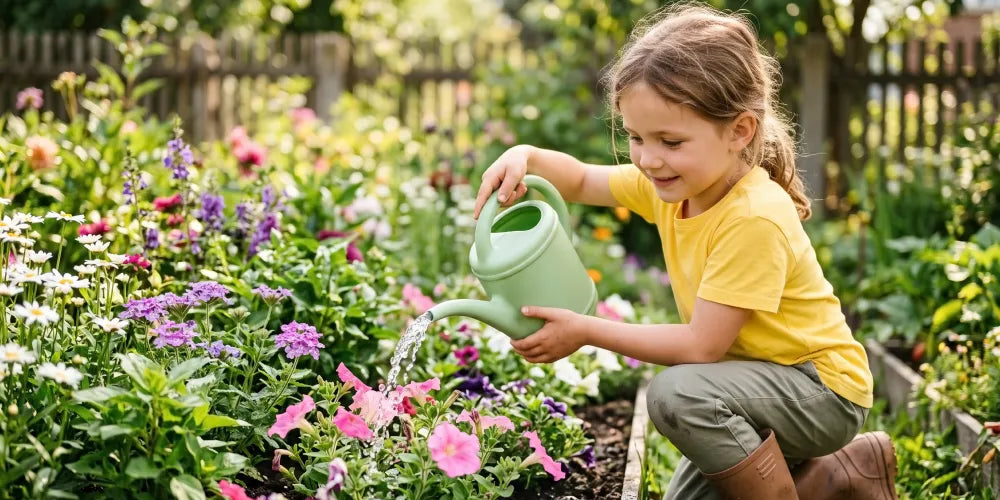
Key Takeaways:
- Most flower beds want about an inch of water per week, delivered in deep soaks rather than daily sprinkles.
- Even coverage is harder than it looks, since taller plants block water from reaching whatever's behind them.
- Watering at the soil line, not over the top, keeps foliage dry and reduces disease.
A flower bed is a crowded space. Plants of different heights and root depths share a few square feet, and the ones in front tend to get everything while the ones in back get whatever makes it through.
At Pocket Hose, the flower bed question is really a coverage question, and the technique solves more of it than volume does.
How Much Water Do Flower Beds Need?
The baseline is consistent across most guidance. Many perennials do best with one inch of water per week from rain and irrigation combined, and annuals fall within a similar range, at roughly an inch per week.
How you split that up matters as much as the total. Deep, infrequent watering beats frequent light watering, because a slow soak moistens the soil thoroughly and encourages roots to grow downward where moisture stays steady.
What's the Best Way To Water Flower Beds Evenly?
Keep a few things in mind to make sure you’re watering your flower beds evenly. Here’s what to know.
Water the Soil, Not Over the Top
Overhead watering is the main culprit behind uneven beds and many diseases. Nozzle spray wets flowers and foliage, making plants more susceptible to disease, and falling drops can crust the soil surface, so water stops soaking in. Get the hose end or a wand down under the leaves and deliver water to the root zone.
Work in Passes Instead of One Pour
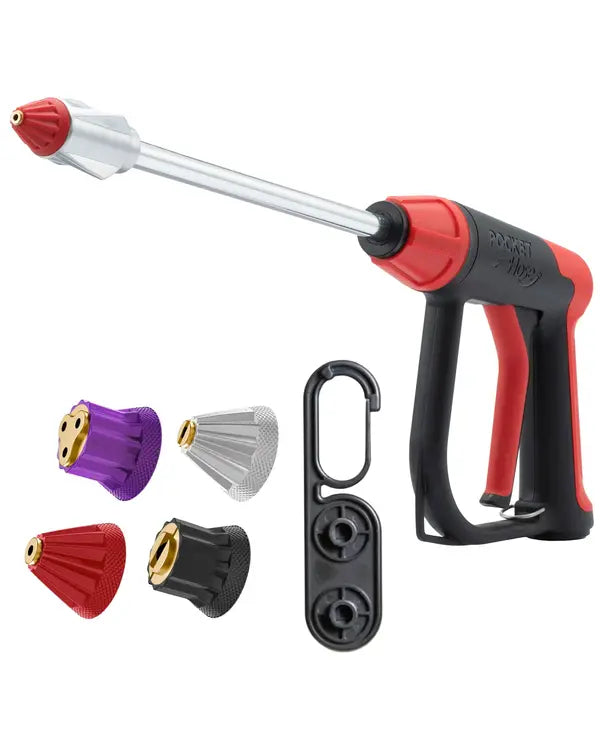
Water the bed in two or three laps rather than soaking one section until it puddles. A gentle shower setting helps here, and our 10-Pattern Sprayer includes a mist for seedlings and delicate blooms. Let each pass absorb before the next one to keep runoff from carrying water away from the plants that need it.
Let a Soaker Hose Handle Dense Sections
For packed beds where you can't reach the back, a soaker laid under the mulch is the practical answer. Slow seepage directly into the soil delivers water without waste or splashing, reaching plants a nozzle can't reach.
When Should You Water Your Flowers?
Water your flowers early in the day. Morning watering lets foliage dry before nightfall, which helps prevent or minimize disease problems and reduces the water that evaporates before it reaches the roots.
Moisten the whole bed thoroughly without leaving it soggy, then let the soil dry moderately before the next session. A flow-control valve at the hose, like the one on our Ballistic, lets you drop the pressure for a slow soak without walking back to the spigot.
Does Mulch Actually Help?
Mulch can really help your flower beds, and it's the cheapest fix for uneven beds. Two to three inches of organic mulch conserves soil moisture and moderates soil temperature, extending the interval between watering sessions.
One caution worth remembering: keep mulch off the plant crowns. Piling it against stems traps moisture where you don't want it. If last year's layer is still in place, a one-inch top-dressing is plenty.
So, How Should You Water a Flower Garden?
Aim low, go slow, and water in the morning. Deliver an inch or so per week in one or two deep soaks, work across the bed in passes so the back row gets its share, and mulch to hold what you've applied. The plants in front will be fine either way, and this is how the rest of the bed catches up.
FAQs
How often should you water flower beds?
Water most beds once or twice a week, with each session deep enough to thoroughly moisten the soil. Containers and newly planted annuals need more frequent attention.
Should you water flowers from above or at the base?
At the base. Overhead watering wets foliage and blooms, increasing disease risk and leaving the back of the bed underwatered.
How do you know if a flower bed needs water?
Check the soil a couple of inches down. If the soil is dry at that depth, it’s time to water your bed. If it still holds moisture, wait.
Is a soaker hose better than hand watering for flowers?
For dense or deep beds, generally yes, since it reaches plants you can't reach. Hand watering gives you more control and a reason to inspect plants closely.
Sources:
How to Maintain Perennial Beds and Borders | Iowa State University Extension
Caring for Annuals | Illinois Extension
Care of Annuals and Perennials | University of Maryland Extension
Mulching Landscape Beds FAQs | Michigan State University Extension

Dejar un comentario
Este sitio está protegido por hCaptcha y se aplican la Política de privacidad de hCaptcha y los Términos del servicio.