

Key Takeaways:
-
Drain your garden hose completely before storing it to help protect it from damage and make storage easier.
-
Wall-mounted hangers, reels, storage containers, and expandable hoses can help maximize limited garage, shed, or patio space.
-
Avoid tight coils and sharp bends, which can create kinks and unnecessary stress on hose materials.
Finding room for outdoor equipment can be challenging when you have a small garage, shed, patio, or balcony. A full-size traditional garden hose can take up valuable floor space, especially when it refuses to stay neatly coiled.
Learning how to store a garden hose in a small space comes down to two things: reducing the amount of room the hose occupies and choosing a storage method that protects it between uses. With the right setup, you can keep your hose organized without sacrificing much-needed storage space.
Drain the Hose Before Storing It
Before putting any garden hose away, turn off the spigot and drain the remaining water. A water-filled hose is heavier, more difficult to coil, and more vulnerable to cold-weather damage.
Once drained, coil the hose loosely rather than creating tight loops. Sharp bends can encourage kinks and put unnecessary stress on the hose. Proper storage also includes keeping the hose in a shaded area and protecting it from temperature extremes.
Take Advantage of Vertical Space
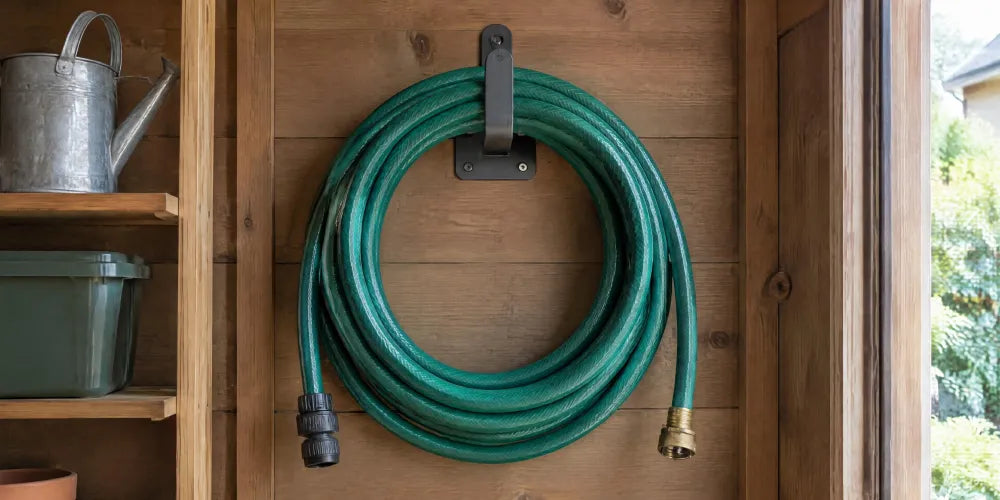
When floor space is limited, look at your walls. A wall-mounted hose hanger or compact reel can keep a traditional hose off the ground and free up usable space.
Install the hanger near the spigot, on a garage wall, or inside a shed where the hose will be easy to access. Make sure the loops are wide enough that the hose isn't being forced into sharp bends.
Vertical storage also prevents the hose from becoming a tripping hazard or getting buried beneath other outdoor equipment.
Choose the Right Hose Length
More hose means more material to store, so avoid buying significantly more length than your space requires. A small patio or garden near the spigot may only need a 25-foot hose.
When choosing a hose for your garden, consider the distance from your spigot to the farthest spot you'll regularly water. Choosing only the length you need reduces bulk without sacrificing useful reach.
Consider an Expandable Hose for Tight Spaces
If storage is your biggest concern, an expandable hose can be particularly useful. Unlike traditional hoses that remain full-size when empty, expandable hoses contract after the water is released.
That compact design makes them easier to fit on a shelf, in a storage container, or in another small area. A memory-free garden hose can also reduce the stiff coils and twists that make traditional hoses frustrating to store in tight spaces.
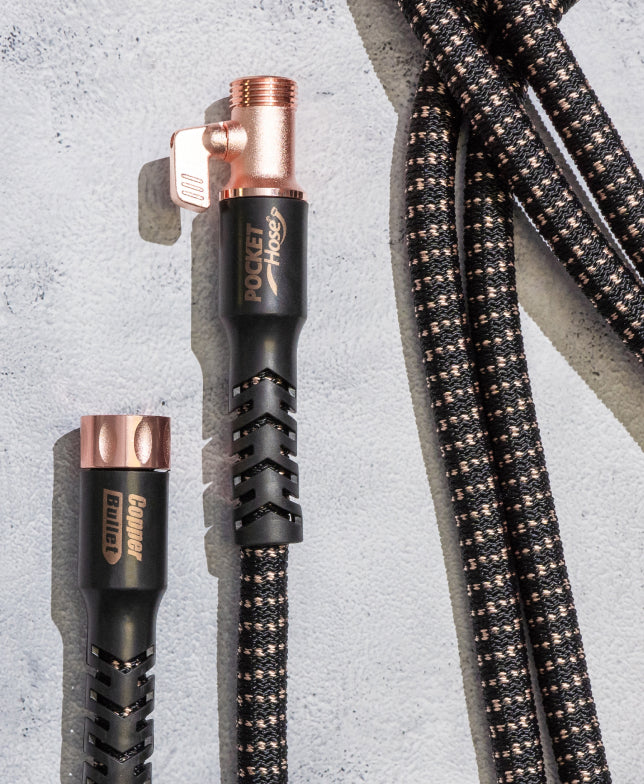
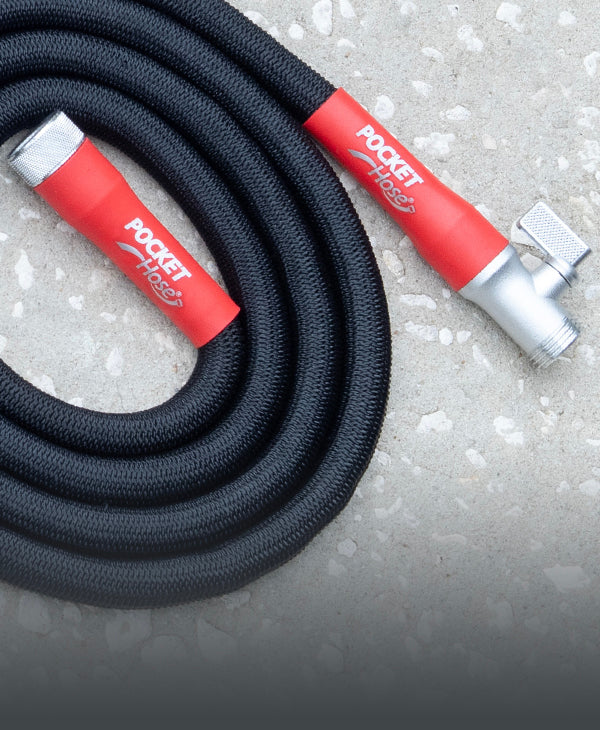
The Pocket Hose Ballistic uses an expanding latex core that grows with water pressure and shrinks for storage. Its lightweight, kink-resistant construction is designed for easier handling, transport, and storage, making it a practical option when space is limited.
Don't Forget About Seasonal Storage
If freezing weather is expected, don't leave your hose connected to the outdoor spigot. Drain it completely and move it to a dry, protected location such as a garage, basement, or shed.
Properly winterizing an expandable hose helps protect it from freezing water and gives you an opportunity to inspect it for leaks, worn fittings, or other damage before the next season.
The Bottom Line
Knowing how to store a garden hose in a small space doesn't require an elaborate organization system. Start by draining the hose, choosing only the length you need, and using vertical or compact storage whenever possible.
If traditional hoses take up too much room, an expandable design offers another solution. Contracting after use provides the reach you need while taking up considerably less storage space between watering sessions.
FAQs
What's the best way to store a garden hose in a small space?
Reducing bulk and getting the hose off the floor are usually the two biggest wins. A wall-mounted hanger or compact reel keeps a traditional hose organized vertically, while an expandable hose shrinks down on its own after use, needing far less room than a coiled full-size hose.
Can I store a garden hose in a small storage container or bin?
Yes, especially with an expandable hose, since it contracts to a fraction of its full length once the water drains out. Make sure the hose is fully drained first, as storing your hose while it’s wet can trap moisture and encourage mildew growth or damage over time.
Do I need to coil my hose a certain way to save space?
Coil your hose loosely rather than tightly. Tight coils and sharp bends in your hose are more likely to lead to kinks, and kinked sections take up awkward space and put extra stress on the hose material. Wide, loose loops actually store more efficiently in the long run because the hose stays flexible and easy to manage.
Is an expandable hose actually better for small spaces than a regular hose?
For storage purposes, generally yes. An expandable hose contracts significantly after use, unlike a traditional hose that stays the same length whether full or empty. That makes it easier to hang, shelve, or tuck into a small bin, garage corner, or balcony storage container.
Sources:
Storing Your Tools | University of Florida
How to Store Your Garden Hose in Winter So It Doesn't Freeze or Crack | Martha Stewart

Dejar un comentario
Este sitio está protegido por hCaptcha y se aplican la Política de privacidad de hCaptcha y los Términos del servicio.