


Key Takeaways:
-
Connecting a garden hose correctly starts with clean, aligned threads and a good rubber washer inside the female fitting.
-
Leaks at the spigot are often caused by a loose connection, a damaged or missing washer, debris, or cross-threading.
-
Avoid overtightening the connection, which can damage or distort the washer instead of creating a better seal.
Connecting a garden hose may seem simple, but an improperly connected hose can leave you with dripping fittings, puddles around the spigot, and frustrating water loss.
Learning how to connect a garden hose properly takes only a few minutes, and many common fitting leaks are surprisingly easy to troubleshoot.
How To Connect a Garden Hose to a Spigot
Start by checking the threaded end of your outdoor spigot and the hose fitting for dirt, mineral buildup, or visible damage. Most residential garden hoses and outdoor spigots use standard 3/4-inch garden hose connections, making it simple to attach compatible hoses.
From there:
- Check that the rubber washer is properly seated inside the female hose fitting.
- Line up the hose fitting straight with the spigot.
- Turn the connector clockwise by hand until snug.
- Avoid forcing the threads or overtightening.
- Slowly turn on the water and inspect the connection for leaks.
Starting the connection straight is important. If the threads aren't aligned, cross-threading can prevent the fitting from forming a secure seal.
Why Is My Garden Hose Leaking at the Fitting?
If water sprays or drips from the connection, don't immediately assume the hose is damaged. Fitting leaks commonly involve the washer or connection itself.
Turn off the water, disconnect the hose, and inspect the rubber washer. A missing, cracked, hardened, or poorly seated washer can prevent a watertight seal. Replace a worn washer, remove any debris from the fitting, reconnect the hose, and test it again.
Also check for cross-threading and damage to the connector. Tightening further isn't always the answer, as overtightening can distort or damage the washer. The connection point can experience additional strain as you pull and reposition a hose around the yard. An angled connector can create a more convenient setup.
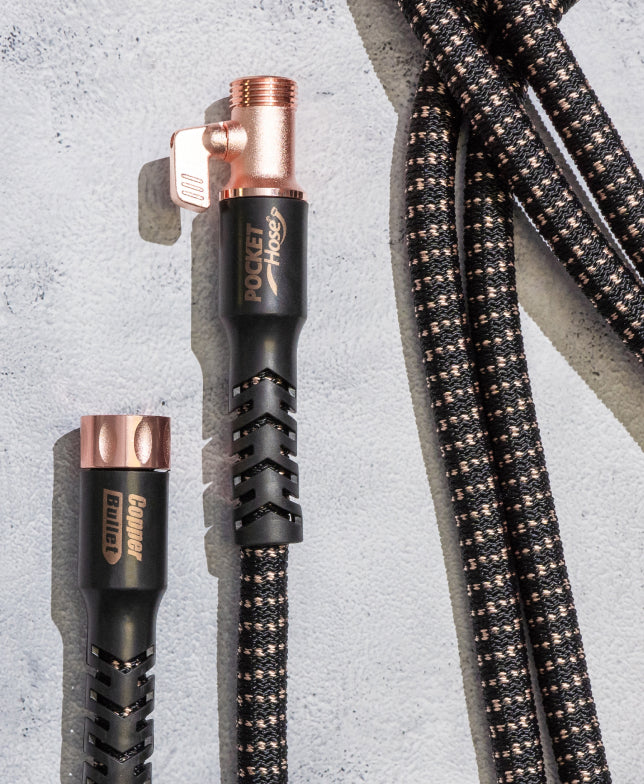
The Pocket Hose Copper Bullet Elbow Connector uses a 46-degree angle and standard 3/4-inch threads. It's designed to reduce wear at the connection point and includes rubber washers for a watertight seal.
If you need to run two watering tools from one faucet, the Copper Bullet Splitter provides two independently controlled outlets and standard 3/4-inch threaded connections.
The Bottom Line
Knowing how to connect a garden hose correctly can prevent many common leaks before they start. Keep the threads clean, make sure the washer is seated properly, align the fitting straight, and tighten it until snug without overtightening.
If a connection starts leaking later, check the washer, threads, and fitting first. A quick inspection and simple replacement part may be all you need to get back to watering without the drip.
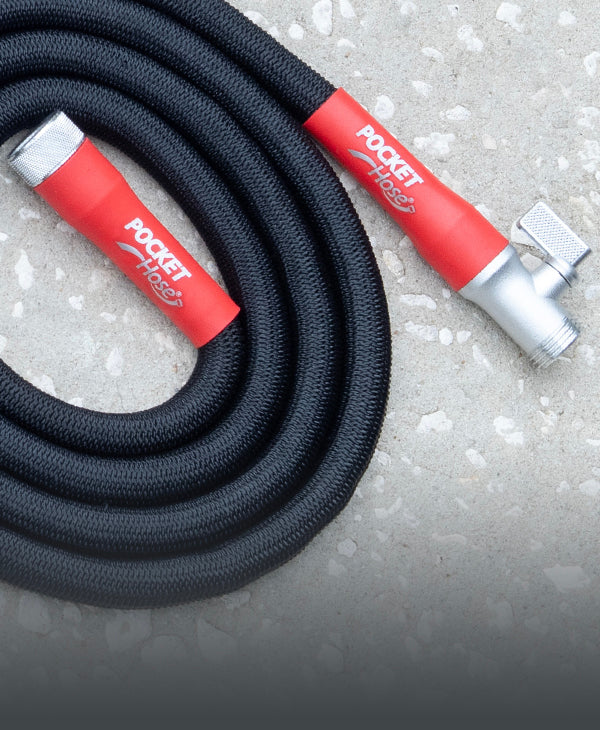
Cracked fittings, extensive hose damage, or repeated leaks indicate that replacement makes more sense than another repair. For an expandable option, the Pocket Hose Ballistic features copper-infused, leak-resistant connectors and a 360° Pocket Pivot designed to reduce kinking at the spigot.
FAQs
How do you connect a garden hose to a spigot?
Check the threads for debris, make sure the rubber washer is seated in the female fitting, and line the hose up straight with the spigot. Turn the connector clockwise by hand until snug, then turn on the water slowly and check for leaks.
Why does my garden hose leak where it connects to the spigot?
A leaking connection is usually caused by a missing, cracked, or poorly seated washer, debris on the threads, or cross-threading during the initial connection. Overtightening can also distort the washer, so a tighter connection isn't always better.
Do I need a washer to connect a garden hose?
Yes. The rubber washer inside the female fitting is what creates a watertight seal between the hose and the spigot. Without it, or with a worn one, water will typically spray or drip at the connection even if the threads are tightened properly.
How do you fix a garden hose fitting that keeps leaking?
Turn off the water, disconnect the hose, and inspect the washer for cracks, hardening, or improper seating. Replacing a worn washer, clearing debris from the threads, and reconnecting the hose without overtightening resolves most fitting leaks.
Can overtightening a garden hose fitting cause leaks?
Yes. Forcing the connection too tightly can distort or damage the rubber washer, making leaks more likely rather than preventing them. Hand-tightening until the connection is snug is typically enough for a secure seal.
Sources:
Part I: Drip Tape Irrigation for Cut Flowers | USU
3 Reasons Your Garden Hose Is Leaking at the Connection Point | Angi

Dejar un comentario
Este sitio está protegido por hCaptcha y se aplican la Política de privacidad de hCaptcha y los Términos del servicio.