

Key Takeaways:
- A splitter has one inlet and two outlets, each with an independent valve, so you can open, close, or throttle either side without touching the spigot.
- It doesn't reduce your water pressure, though running both outlets at once divides the available flow between them.
- The real benefit is eliminating the constant unthreading and rethreading that comes with having one spigot and more than one job.
Most yards have exactly one outdoor spigot and at least two things that need water. That mismatch is why people spend summer evenings unscrewing a sprinkler to attach a hose, then unscrewing the hose to reattach the sprinkler.
At Pocket Hose, we most often suggest a splitter because it solves a problem people have stopped noticing.
How Does a Hose Splitter Work?
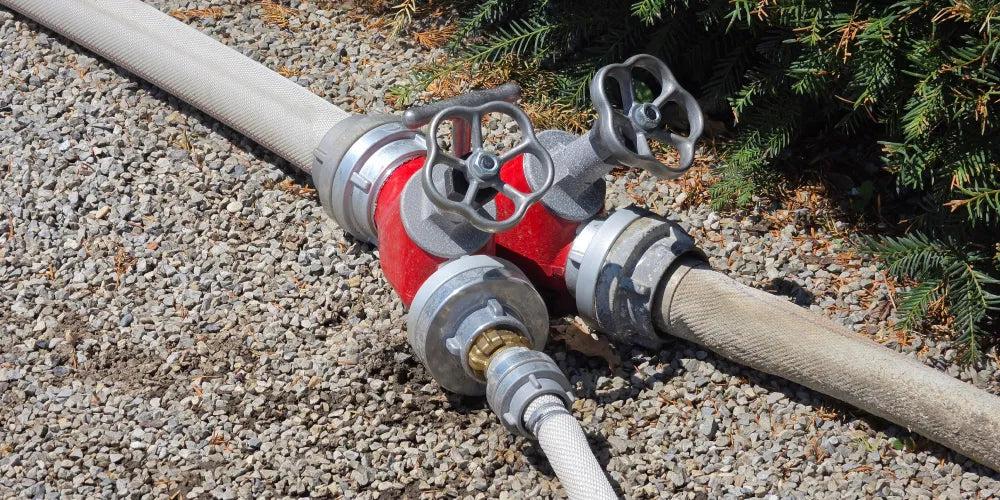
The body is simple. Water enters through a single-threaded inlet, reaches an internal chamber, and exits through two threaded outlets. Nothing is metered or regulated inside. It's a fork in the road.
The useful part is the valves. Each outlet has its own lever or knob controlling a valve that seats against the opening. Better splitters use ball valves, in which a quarter-turn of the lever rotates a drilled sphere either in line with the flow or across it.
That design gives you a definite open and closed position and holds up well to repeated use. Cheaper designs use a screw-down stem instead, which works but takes several turns and tends to weep as the seal wears.
Because the valves operate independently, you can open one side while keeping the other shut. You can also crack one partway to throttle it, which is handy when one side feeds something delicate.
Does a Splitter Cut Your Water Pressure in Half?
No, and this is the most common worry. Static pressure at the spigot stays the same, and either outlet, on its own, delivers what the spigot did before.
What divides is flow. Open both outlets at the same time, and the available gallons per minute are shared between the two lines, so each one runs weaker than it would alone. Friction losses also build with the length of each run, which compounds the effect if both hoses are long.
Expandable hoses are worth considering here, too, since they require adequate pressure to reach full length and may not fully expand with both sides wide open.
What Can You Actually Do With a Splitter?
A splitter can have a range of benefits. When you have a splitter, you can:
- Run a sprinkler and keep a hose free: Leave a sprinkler connected on one side and a hose with a nozzle on the other, switching between them with a lever instead of a wrench.
- Automate one side and not the other: Put a timer on one outlet and leave the other manual, so scheduled watering runs without tying up the spigot.
- Feed a soaker or drip line permanently: Keep a soaker hose or drip system connected to one outlet all season without giving up your everyday hose.
What Should You Look For in a Splitter?
When you’re shopping for a splitter, look for features like:
- Independent shut-offs: Some cheap models split the flow without giving you separate control over each outlet.
- Lever-style ball valves: Easier to operate than screw-down knobs, especially with wet hands or gloves.
- Lead-free connector material: The splitter sits directly in the water path, so construction matters.
- Outlet count: Two covers most households; four-way manifolds suit multiple drip zones, though flow division becomes more noticeable with each line you open.
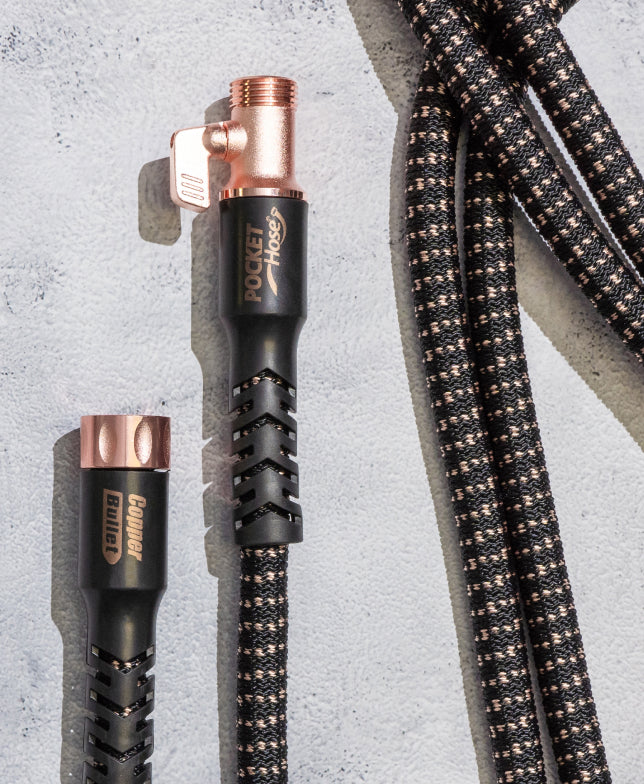
Our Copper Bullet splitter is a two-way splitter with separate shutoffs on each side. Plus, it’s infused with real copper, so it’s lead-free.
Does a Splitter Affect Backflow Protection?
Many outdoor spigots have a vacuum breaker at the top that prevents water from being siphoned backward into your household supply. A splitter threads below that device, so it doesn't interfere.
This matters because hose setups are a cross-connection point. Water authorities note that a household hose connected to an outside faucet, with its open end in another container, commonly causes back-siphonage.
So, Do You Need a Hose Splitter?
If you have one spigot and one watering task, no. If you find yourself swapping attachments more than once a session or want to use a soaker hose, a splitter pays for itself in saved annoyance almost immediately. It's a small part that removes a small irritation you repeat 40 times a summer.
FAQs
Does a hose splitter reduce water pressure?
Not by itself. Pressure stays the same at both outlets, though running both at once splits the available flow, so each line delivers less.
Can you connect two hoses to one spigot?
Yes, that's exactly what a splitter does. Look for one with separate shutoff valves so you can control each hose independently.
What's the difference between a splitter and a manifold?
Mostly the number of outlets. Splitters typically have two, while manifolds have three or four. Both work the same way internally.
Do splitters leak?
They can leak at the washer or where the inlet threads onto the spigot. Confirm there's one flat washer at each connection, and hand-tighten rather than use pliers.
Sources:
Garden Hose Flow Rate and Time | Washington State University Irrigation
Saving Water Outdoors | City of Portland
Backflow Prevention | Municipal Water Authority of Adams Township

Dejar un comentario
Este sitio está protegido por hCaptcha y se aplican la Política de privacidad de hCaptcha y los Términos del servicio.