

Key Takeaways
- You can water in freezing weather, but water left in the hose afterward causes damage.
- Cold stiffens hose materials, so drain your hose right away.
- Disconnecting the hose from the spigot protects your plumbing as much as it protects the hose.
Cold weather doesn't end the watering season. Greenhouses still need tending, and newly planted trees still want moisture as they enter their first winter.
At Pocket Hose, the question we get every November is whether an expandable hose can handle the job, and the answer depends far more on what you do after watering than on the watering itself.
What Happens to a Garden Hose in Freezing Temperatures?
Water is unusual among liquids. Most substances get denser as they cool, but water reaches maximum density around 39°F and then expands as it approaches freezing, which is why ice floats.
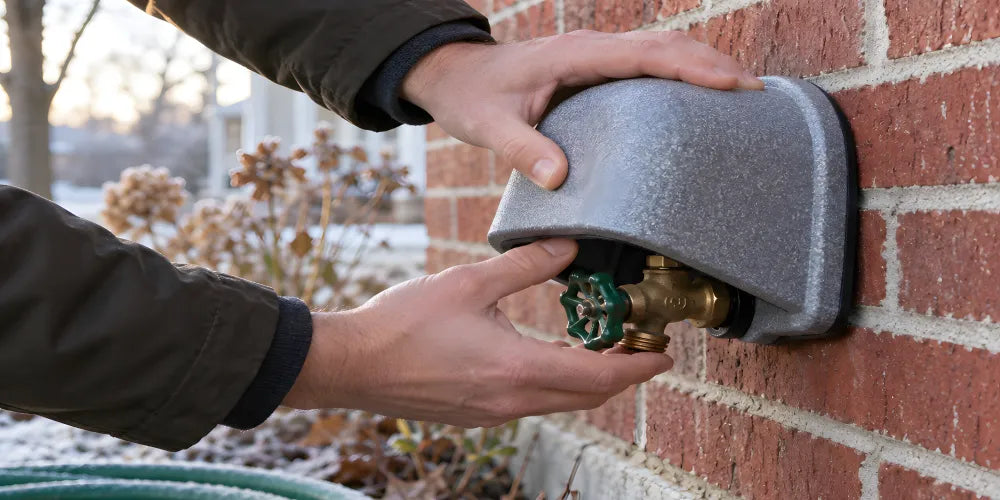
That expansion is the whole problem. Water trapped inside a hose has nowhere to go as it turns to ice, and the resulting pressure can split the hose wall. Worse, it doesn't stop at the hose. Water left in a connected hose can freeze, expand, and push damage back into the spigot and the pipes behind it, which turns a replaceable hose into a plumbing repair.
Why Does Cold Weather Make a Hose Stiff?
Materials change behavior as temperatures drop. Most polymers begin to stiffen in the cold and eventually pass through what's called the glass transition, at which point stiffness can increase dramatically and the material becomes hard and brittle rather than flexible.
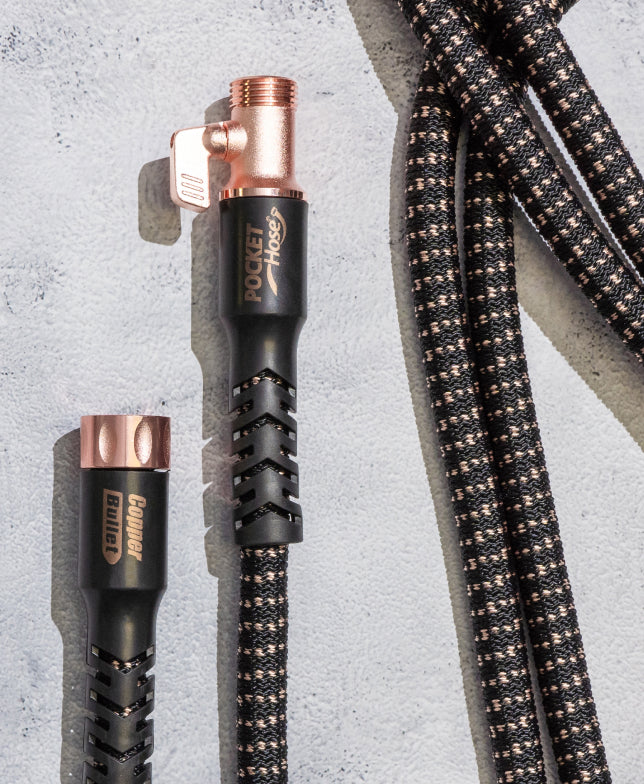
Garden hoses don't reach that point in typical winter weather, but they do stiffen noticeably. A hose that coiled easily in August may resist in January, and forcing a sharp bend into cold material is more likely to damage it. Our Ballistic is rated for operation between 32°F and 140°F, which is a useful reminder that 32°F is the floor, not a suggestion. The Ballistic also features a Tri-Tex Triple-Layer Latex Core, using three layers of high-strength latex for flexibility and confidence under pressure. Tested up to 650 PSI.
Can You Still Water in Winter?
Yes, and in plenty of situations, you'll need to, as greenhouse routines don't pause for the forecast. Evergreens and fall-planted trees also benefit from occasional deep watering through dry winter stretches.
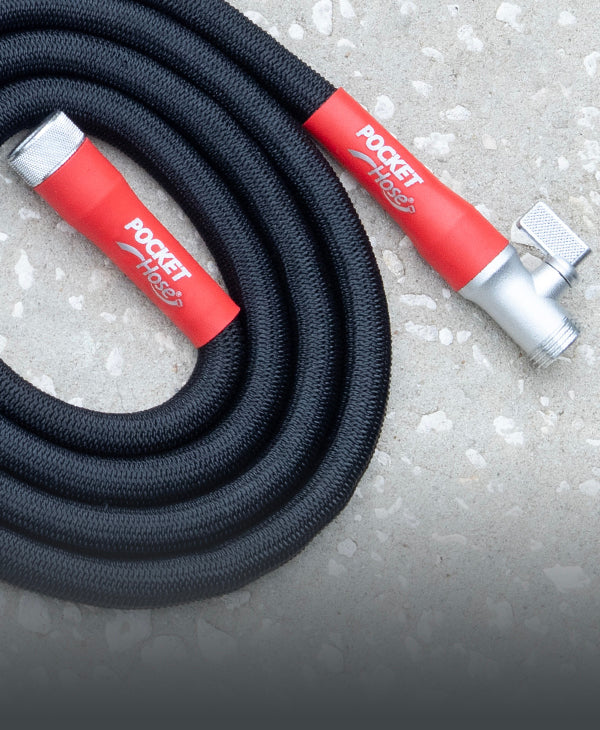
Expandable hoses have a genuine advantage here. Because they contract and self-drain once the water shuts off, most water leaves on its own rather than sitting inside and waiting to freeze.
How Do You Store an Expandable Hose for Winter?
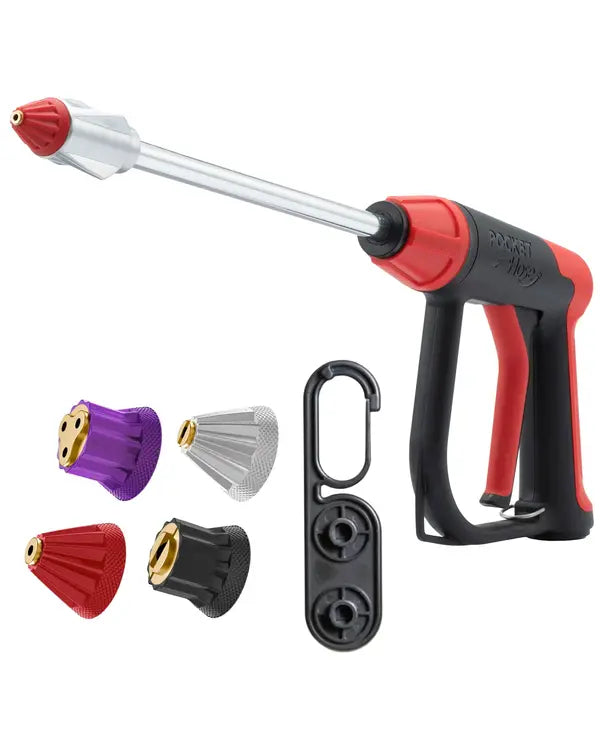
Drain it completely first, with the hose fully extended so nothing stays trapped. Detach the spray nozzle and store it separately, since water caught in the nozzle body freezes just as readily.
Straighten out any kinks (or skip this concern entirely with a kink-free Pocket Hose), then wind the hose loosely into a circle rather than a tight coil. Cold material holds whatever shape you force on it.
Store it somewhere temperature-controlled. A garage, a basement, or a shed that stays above freezing all work. A bucket in an unheated barn does not.
So, Can You Use an Expandable Hose in Cold Weather?
You can, as long as the hose is empty and disconnected when you're finished. Freezing damage comes from standing water, not cold air, which means the habit matters more than the temperature. Drain it, disconnect it, and bring it in, and your hose will be ready when the season turns.
FAQs
Can you leave a hose outside in winter?
You can leave a hose outside in the winter only if it's fully drained and disconnected from the spigot. Even then, repeated freeze cycles are hard on hose materials, so indoor storage is better.
At what temperature should you disconnect a garden hose?
Many people disconnect garden hoses once overnight lows reach the low 40s, which builds in a margin.
Will a frozen hose always be ruined?
A frozen hose isn’t always ruined. A hose that froze while empty often survives, but one that froze full of water has usually split somewhere, even if the damage isn't visible yet.
Do expandable hoses handle cold better than rubber hoses?
Expandable hoses drain themselves when the water shuts off, which removes the main cause of freeze damage. Both types still need to be disconnected and stored properly.
Sources:
Water Density | U.S. Geological Survey
Protect Water Pipes From Freezing | UGA Cooperative Extension
Low Temperature Properties of Polymers | Appalachian State University

Leave a comment
This site is protected by hCaptcha and the hCaptcha Privacy Policy and Terms of Service apply.