

Key Takeaways:
-
Hose diameter affects water flow, not fitting compatibility, and choosing the wrong size can reduce performance even with good pressure.
-
Most homeowners are best served by a 5/8-inch hose, which balances water flow, length capability, and ease of handling.
-
Larger diameters perform better for long runs and sprinklers, while smaller diameters work well for short distances and light watering tasks.
Choosing the right garden hose diameter can feel surprisingly confusing, especially when most hoses look nearly identical at first glance. Diameter plays a major role in water flow, pressure, and how efficiently you can water your yard. Whether you’re tending a patio garden or keeping a large lawn lush, choosing the correct hose diameter makes all the difference.
In this guide, we’ll break it down simply so you can feel confident choosing the right hose for your space, and avoid common watering frustrations along the way.
What Are Different Hose Diameters Used For?
Garden hose diameter refers to the inside width of the hose, not the outside. This measurement matters because it determines how much water can flow through the hose at one time. In simple terms, wider hoses deliver more water, while narrower hoses are lighter and easier to handle. Choosing the right diameter helps ensure your hose performs well for your specific watering needs.
Most residential garden hoses fall into three standard diameters, each designed for different types of tasks:
-
1/2 inch
-
5/8 inch
-
3/4 inch
Smaller diameters are generally best for short hose runs and light watering tasks. Larger diameters are typically better for longer distances, sprinklers, and high-demand watering jobs.
|
Hose Diameter |
Best For |
Typical Hose Length |
Water Flow |
Ease of Handling |
|
1/2 inch |
Small yards, patios, container plants |
25-50 ft |
Low |
Very easy |
|
5/8 inch |
Most residential yards, sprinklers |
Up to 100 ft |
Medium- High |
Easy |
|
3/4 inch |
Large properties, high-demand tasks |
75-150+ ft |
High |
Heavier |
1/2-Inch Hose
This size works well for light watering tasks in small spaces. It’s easy to maneuver, simple to store, and ideal for hand watering plants close to the spigot. However, its lower water flow makes it less effective for sprinklers or longer hose runs.
5/8-Inch Hose
The most common choice for homeowners by far, a 5/8-inch hose offers a reliable balance of water flow and manageability. It performs well with sprinklers, soaker hoses, and everyday watering tasks, making it a dependable option for most yards.
3/4-Inch Hose
Designed for maximum water delivery, a 3/4-inch hose is best suited for large yards or demanding jobs like filling pools or running multiple sprinklers. While powerful, it’s heavier and often unnecessary for routine household watering.
Understanding how each hose diameter is used makes it easier to choose a hose that matches your yard size, hose length, and watering routine, without sacrificing performance or convenience.
Why Does Hose Diameter Matter?
Hose diameter plays a critical role in how efficiently water moves from your spigot to your yard. While household water pressure is determined by your plumbing system, hose diameter controls water flow, or how much water can pass through the hose at one time. A wider hose allows more water to move simultaneously, while a narrower hose limits the volume of water delivered.
This difference in flow directly affects performance. With a smaller-diameter hose, water may exit with noticeable pressure, but the total amount of water reaching your plants, sprinkler, or nozzle is reduced. That’s why some hoses feel forceful at the tip yet still take longer to complete tasks like watering lawns or filling containers. A larger-diameter hose delivers a higher flow rate, allowing tools and sprinklers to operate as intended and reducing overall watering time.
Hose length introduces another important factor: pressure loss due to friction. As water travels through a hose, it rubs against the interior walls, gradually reducing pressure. The longer the hose, the greater the pressure loss. This is known as the length tradeoff. Over short distances, this loss is minimal and often unnoticeable. Over longer distances, however, it can significantly affect performance.
A wider hose helps offset this pressure loss by allowing more water to move through with less resistance. This becomes especially important for hose runs longer than 75 to 100 feet, where a smaller diameter may struggle to maintain consistent flow. In these situations, upgrading diameter often improves efficiency more than increasing pressure alone.
Ultimately, hose diameter and hose length work together. Choosing the right hose ensures consistent water delivery, better tool performance, and a more efficient watering experience, without unnecessary frustration or wasted time.
Small Yard Example
Imagine watering a small front yard, patio garden, or a few flower beds located close to your outdoor spigot. In this situation, a short hose with a smaller diameter is usually more than sufficient.
Because the hose run is short, there is very little pressure loss, and water reaches plants easily for hand watering or filling a watering can. The lighter weight of a smaller-diameter hose also makes it easier to maneuver around tight spaces, coil after use, and store when you’re finished.
For homeowners with limited outdoor space or minimal watering needs, convenience often matters more than maximum water volume, making a smaller hose diameter a practical and efficient choice.
Large Yard Example
If you’re looking to water a larger yard, you may need to run a sprinkler across a wide lawn or reach garden areas far from the house. In this case, hose diameter becomes far more important.
A long hose with a small diameter can restrict water flow, resulting in weak spray patterns or uneven sprinkler coverage. A wider-diameter hose allows more water to reach the sprinkler, helping it operate correctly and distribute water evenly across the lawn. This improves efficiency, reduces watering time, and ensures plants receive consistent moisture.
How To Choose the Right Hose for Your Watering Routine
Beyond diameter, it’s helpful to consider how often and how intensely you water your yard. If you water daily or rely on sprinklers for large areas, choosing the correct hose diameter can save time and reduce frustration over the course of a season. A hose that delivers adequate flow allows sprinklers and nozzles to perform as intended, leading to more consistent coverage and healthier plants.
For occasional watering or smaller spaces, flexibility and ease of handling may matter more than maximum flow. Matching hose diameter to your routine (not just your yard size) helps ensure your setup works efficiently without being heavier or more powerful than necessary.
Hose Diameter vs. Fitting Size: What’s the Difference?
Hose diameter and fitting size are often confused, but they describe two completely different things. Hose diameter refers to the inside width of the hose, which determines how much water can flow through it. This is where you see sizes like 1/2 inch, 5/8 inch, and 3/4 inch. The larger the inside diameter, the more water the hose can deliver.
Fitting size, on the other hand, refers to the threaded connectors on the ends of the hose. Most residential garden hoses use a standard Garden Hose Thread (GHT) fitting. This means that regardless of the hose’s diameter, it will still screw onto a standard outdoor spigot or hose attachment without issue.
This is where confusion often arises. A hose may connect perfectly to your faucet but still deliver a weaker water flow. When that happens, the issue isn’t the fitting; it’s the hose diameter restricting how much water can pass through. The fittings simply allow the hose to connect; they don’t control water volume.
In short, fitting size determines compatibility, while hose diameter determines performance. Understanding the difference helps you troubleshoot low-flow issues and choose a hose that actually meets your watering needs, rather than assuming a poor connection is the problem.
How To Know What Diameter Hose You Have
If you’re not sure what diameter hose you currently own, there are a few simple ways to find out. Many hoses have the diameter printed directly on the hose jacket or listed on the original packaging. If you no longer have the packaging, checking the manufacturer’s website using the model name can often provide the information.
You can also measure the hose yourself. To do this, disconnect the hose from the spigot and any attachments, then measure the inside opening of the hose using a ruler or tape measure. It’s important to measure the interior width rather than the outside, as the exterior thickness varies by hose material and construction.
If the opening measures close to 1/2 inch, 5/8 inch, or 3/4 inch, that’s your hose diameter. Measuring is especially helpful when replacing an older hose or troubleshooting low water flow, as it allows you to confirm whether the diameter may be contributing to performance issues.
Expandable Hoses
Expandable hoses are constructed differently from traditional rubber or vinyl hoses. They use a flexible inner tube that expands when water flows through it and contracts when the water is turned off. This design makes them significantly lighter, more flexible, and easier to store than standard hoses.
Expandable hoses are often well-suited for light to moderate watering tasks, from everyday hand watering to tackling larger yard and garden jobs. Because they are easy to maneuver and compact when not in use, many homeowners prefer them for everyday watering, and with the right model, they deliver the flow and durability to handle much more.
Pocket Hose is engineered to deliver strong, reliable performance alongside their convenience advantages — making it a smart choice for homeowners who want the best of both worlds.
Options like Pocket Hose are popular for:
-
Everyday watering tasks
-
Watering gardens, lawns, and outdoor spaces of all sizes
Pocket Hose
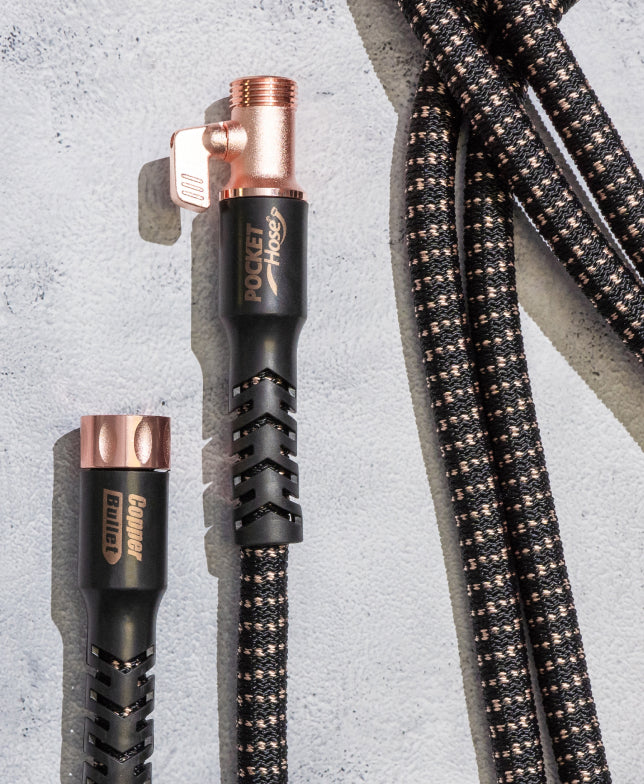
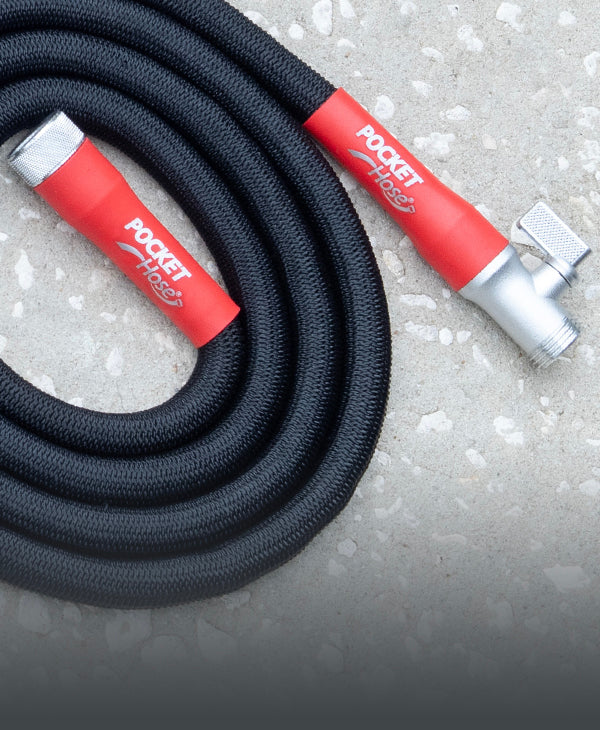
As the #1 expandable hose in the world, Pocket Hose delivers a lighter, smarter, more enjoyable watering experience that leaves traditional rubber and vinyl hoses in the dust. The magic is in the design: turn on the water and watch it grow into a full-size, powerful hose. Turn it off, and it shrinks back down to a compact, pocket-sized package that's effortless to carry and store.
Reinforced outer jackets, multi-layer inner tubes, and premium copper-infused connectors mean this hose is engineered to perform season after season. No more kinking, tangling, or lugging around a heavy mess.
Homeowners everywhere have made the switch and never looked back — because once you experience the difference, there's simply no going back to the old way. Whether you're watering your garden, lawn, or flower beds, Pocket Hose handles it all with ease.
The Bottom Line
Choosing the right hose diameter comes down to how much water you need and how far it has to travel. Smaller diameters work well for short runs and light watering, while wider hoses perform better for longer distances and sprinklers .
Understanding these differences makes it easier to select a hose that fits your yard, your routine, and your watering goals, so you get consistent performance without unnecessary hassle.
FAQs
How do you measure hose diameter?
To measure hose diameter, disconnect the hose from the spigot and any attachments , then measure the inside opening of the hose using a ruler or tape measure. Do not measure the outside of the hose, as the exterior thickness can vary. The measurement will typically be close to 1/2 inch, 5/8 inch, or 3/4 inch.
Why is hose diameter important?
Hose diameter determines how much water can flow through the hose at one time. A wider diameter allows more water to move through, improving flow and performance, especially for sprinklers and longer hose runs. Choosing the right diameter helps maintain consistent pressure and reduces watering time.
What are the use cases for different hose diameters?
Smaller diameters, like 1/2 inch, work best for short hose runs and light watering. A 5/8-inch hose suits most residential needs, including sprinklers. A 3/4-inch hose is ideal for large yards or high-demand watering tasks.
Sources
Expert Tips for Buying a Garden Hose and Reel | Consumer Reports
What Size Is a Garden Hose Fitting? | Angi
Different Types Of Garden Hoses | Learn About Various Uses For Garden Hoses | Gardening Know How
Garden Hoses: What To Know Before You Buy | The Family Handyman

Leave a comment
This site is protected by hCaptcha and the hCaptcha Privacy Policy and Terms of Service apply.