

Key Takeaways:
-
Expandable hoses are often well-suited for small yards because they're lightweight, flexible, and compact when not in use.
-
Traditional hoses can offer excellent durability, but their heavier weight and bulkier storage may be unnecessary for light watering in compact spaces.
-
The best hose choice depends on your watering needs, storage space, and hose length, rather than yard size alone.
When you have a small yard, you don't necessarily need the biggest or heaviest garden hose available. Choosing between an expandable vs. traditional hose for small yards comes down to what you water, how much hose you actually need, and how easily you want to move and store it.
Both types can get the job done, but their differences become particularly noticeable in compact outdoor spaces.
Expandable vs. Traditional Hoses: What's the Difference?
A traditional garden hose typically maintains the same size and shape whether it's being used or stored. Rubber and vinyl hoses are widely available and can be durable choices, but they may also be heavier and require more storage space.
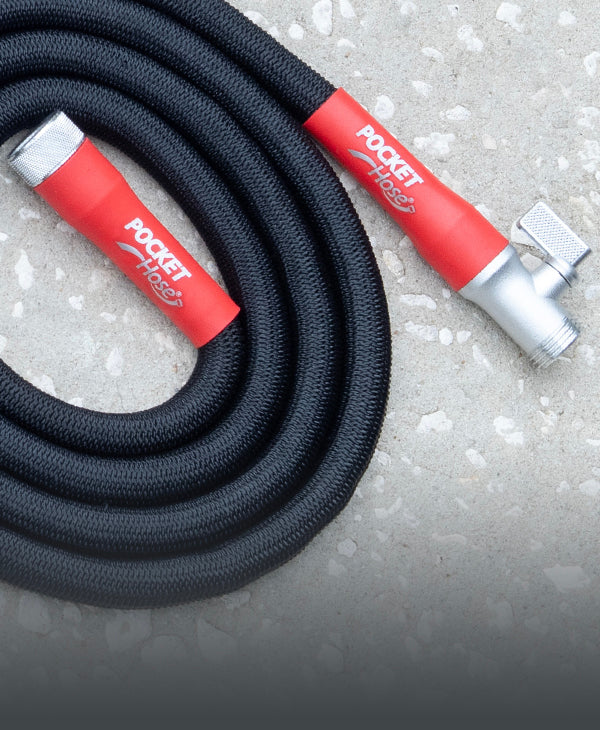
An expandable hose works differently. Its flexible inner tube expands as water flows through it and contracts when the water is turned off and released. This design creates a lightweight hose that takes up considerably less space between uses.
Why Do Expandable Hoses Work Well in Small Yards?
Small yards often involve navigating around flower beds, patio furniture, containers, and landscaping. A lightweight, flexible hose can be easier to reposition without dragging a heavy length of material behind you.
Expandable hoses also have an advantage when it comes to storage. Once drained, they contract into a smaller size, making them convenient for homes with limited garage, shed, or patio storage.
Their flexible design can also reduce some of the coiling, tangling, and kinking frustrations associated with more rigid hoses. If easy handling is a priority, a memory-free garden hose design may make routine watering feel simpler.
When Does a Traditional Hose Make Sense?
Traditional hoses still have advantages. A quality rubber hose can be a good choice for demanding jobs, rough surfaces, or situations where durability is more important than weight and compact storage.
When caring for a small residential yard, however, that extra bulk may not always be necessary. If your primary tasks are watering flowers, tending a garden, rinsing a patio, or washing a vehicle, the convenience of a lightweight expandable hose may outweigh the benefits of a heavier traditional design.
How To Choose the Right Hose Length for Your Yard
Whichever style you choose, don't buy more hose than you need. A 25-foot hose may provide enough reach for many small gardens and patios, while a 50-foot hose can accommodate spaces that extend farther from the spigot.
Measure from your water source to the farthest area you'll regularly water. Less unnecessary hose means less material to carry, maneuver, and store.
The Bottom Line
When comparing an expandable vs. traditional hose for small yards, neither style is automatically right for everyone. Traditional hoses can be a strong choice for demanding applications, while expandable hoses stand out for their lightweight handling, flexibility, and compact storage.
For homeowners who prefer the lightweight and compact advantages of an expandable design, Pocket Hose Ballistic offers lengths suited to different yard sizes. Its expandable construction contracts for compact storage, while features such as the 360° Pocket Pivot help reduce twisting and kinking near the spigot.
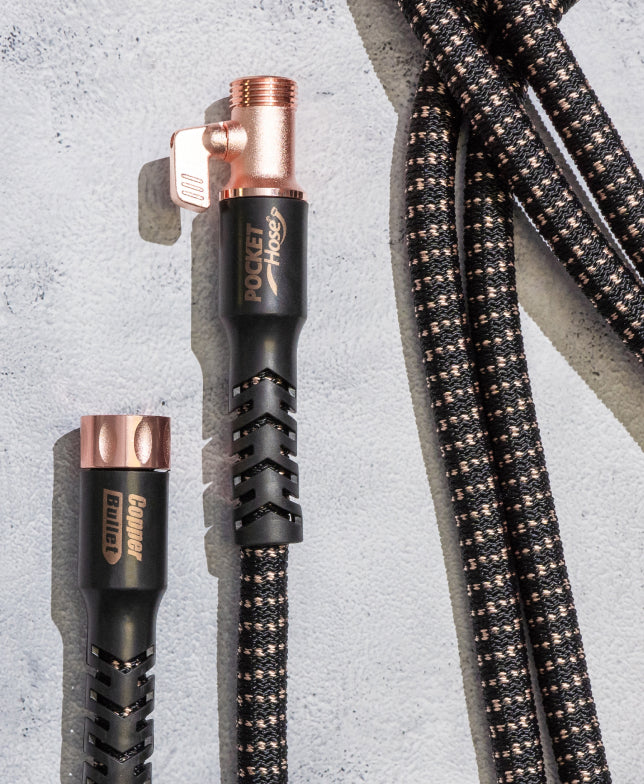
Small-yard gardeners can also consider accessories that simplify their setup, such as the Copper Bullet Elbow Connector for an angled connection at the spigot or a hose splitter when one outdoor faucet needs to serve multiple watering tasks.
FAQs
Is an expandable hose or a traditional hose better for a small yard?
For most small yards, an expandable hose is the more practical choice because it's lightweight, easy to maneuver around tight spaces, and compact to store. A traditional hose may still make sense if you need extra durability for heavy-duty or frequent use on rough surfaces.
How much lighter is an expandable hose than a traditional hose?
Expandable hoses are generally much lighter than rubber or vinyl hoses of the same length because their inner tube only expands under water pressure rather than maintaining a fixed, heavy structure. This makes them noticeably easier to drag around flower beds, containers, and patio furniture.
What hose length is best for a small yard?
Most small yards are well served by a 25-foot hose, while yards with more distance between the spigot and watering areas may need up to 50 feet. Measuring from your water source to the farthest point you'll water helps you avoid buying more hose than you need.
Do expandable hoses work well for tasks beyond watering plants?
Yes. Expandable hoses can handle light-duty tasks like rinsing a patio, washing a car, or filling a small container garden. For heavier or more demanding jobs, a traditional hose's added durability may be a better fit.
Sources:

Leave a comment
This site is protected by hCaptcha and the hCaptcha Privacy Policy and Terms of Service apply.